Easy Back to School Icebreakers That Help Students Connect
This post contains affiliate links. Which means we may receive a commission for any purchases made through our links. As an Amazon Associate, I earn from qualifying purchases. See our full policy. Thank you for reading this post. Don't forget to subscribe!
The first few days of school can feel a bit awkward for everyone.
Some students walk into the classroom ready to talk to anybody. Others stay close to the one person they already know, give short answers, or wait for someone else to speak first.
That does not necessarily mean they do not want to participate. Sometimes they just need a simple reason to start talking.
That is where a good back-to-school icebreaker can help.
I like activities that are easy to explain, do not require a lot of preparation, and give students something specific to do. The goal is not to force everyone to be outgoing. It is simply to make it easier for students to learn names, discover shared interests, and begin feeling more comfortable in the room.
7 Low Prep Back to School Icebreakers
Here are seven simple back-to-school icebreakers you can use during the first days of school.
1. Play Find Someone Who Bingo
Find Someone Who Bingo gives students a reason to get out of their seats and talk with several classmates.
Each student receives a game board filled with statements such as:
- Has a pet
- Likes to draw
- Has a summer birthday
- Enjoys playing soccer
- Knows how to ride a bike
Students walk around the room and ask questions to find someone who matches each statement. When they find a match, that classmate writes their name in the corresponding space.
Once students finish collecting names, have everyone return to their seats. Call the students’ names one at a time while players mark each matching name on their boards.
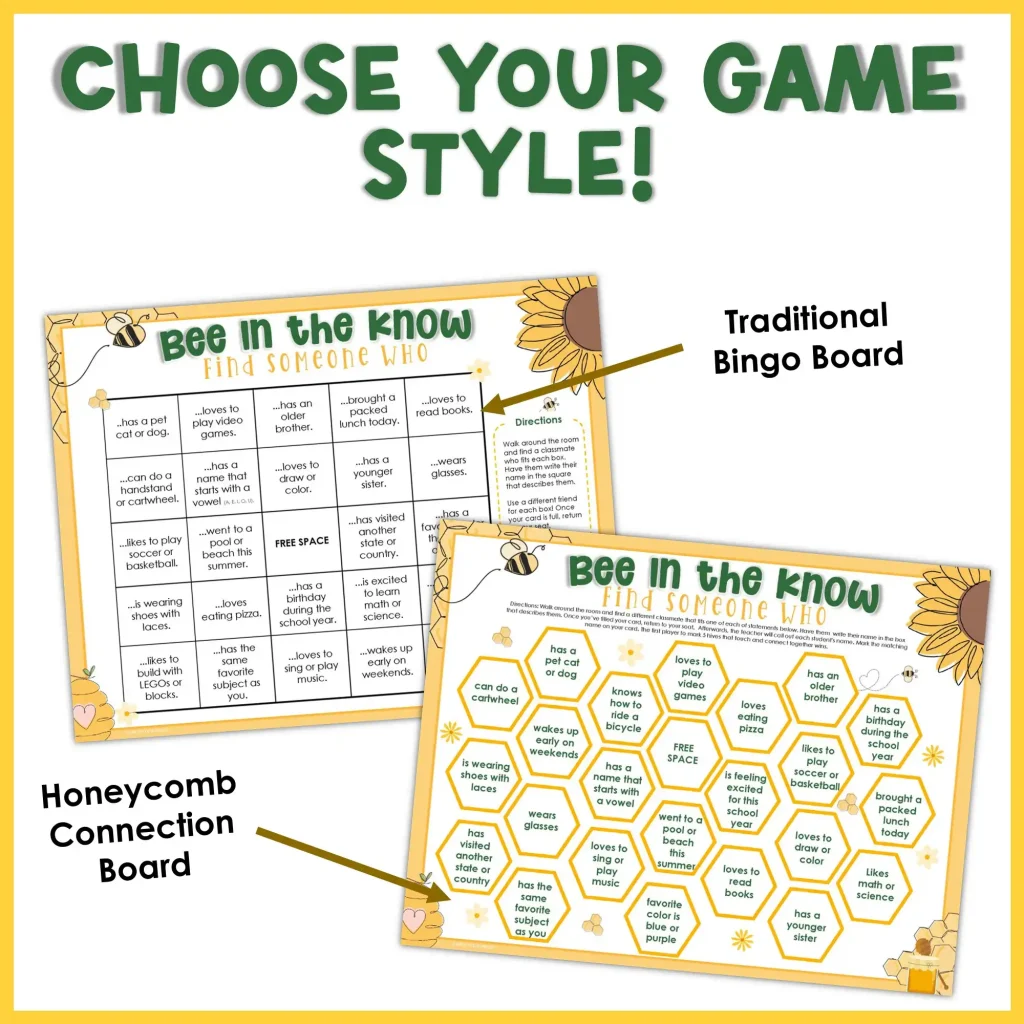
My Bee Find Someone Who Bingo Activity includes two ways to play:
- A honeycomb board where students try to mark five connected hives
- A traditional bingo board where students try to mark five spaces in a row
The honeycomb board gives the game a little twist. The five winning hives only need to touch and connect. The path can turn and does not have to form a straight line.
2. Interview a Classmate
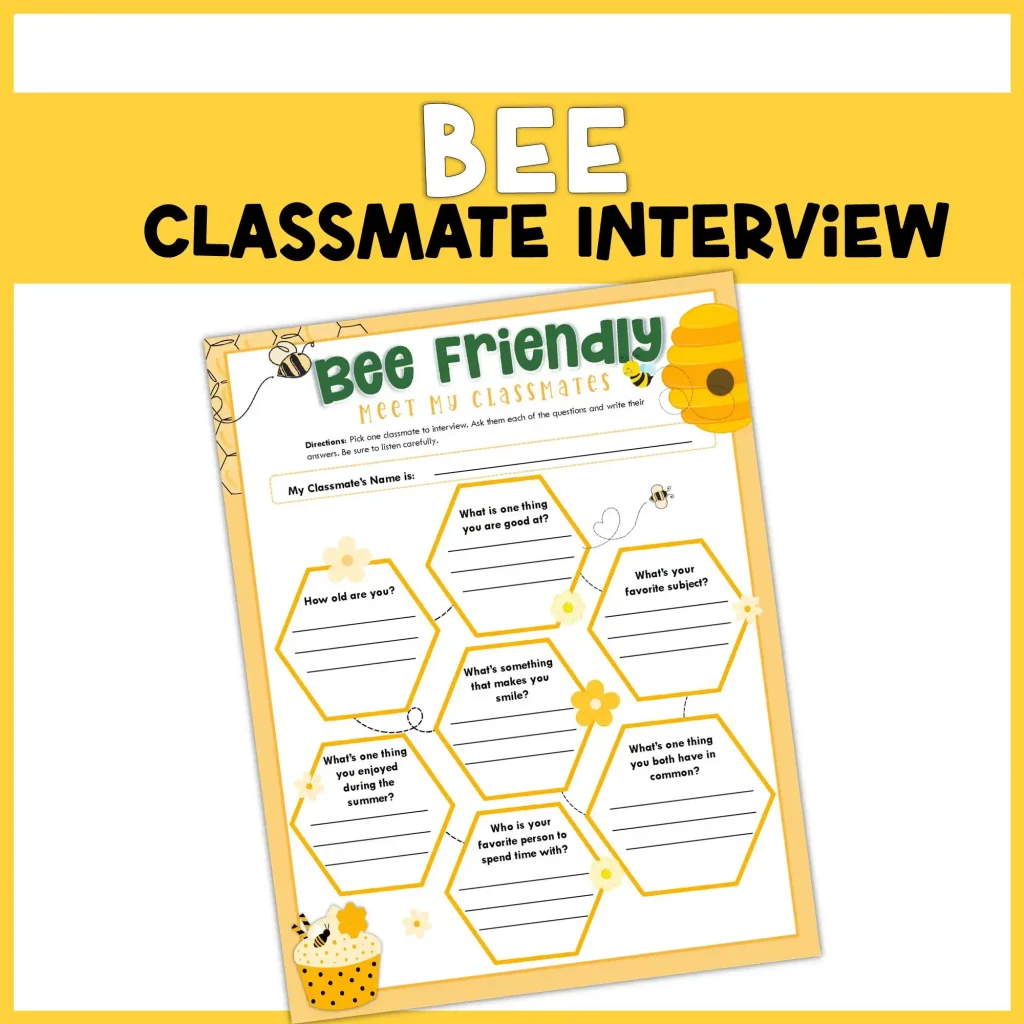
A classmate interview is a quieter option for students who may feel overwhelmed moving around a busy classroom.
Pair students and give each person a simple interview sheet. Students take turns asking questions and writing down their partner’s answers.
Questions could include:
- What is your favorite activity?
- What are you good at?
- What would you like to learn this year?
- What is something that makes you smile?
- What is one thing we have in common?
Afterward, students can introduce their partners to the class or share one interesting thing they learned.
The free Bee Friends Classmate Interview Sheet gives students a little structure so they are not sitting there wondering what to ask. It also includes space for both writing and drawing.
3. Try Classroom Connection Corners
For this activity, choose a few simple options and assign one to each corner of the room.
For example:
- Cats
- Dogs
- Both
- Neither
Ask students to move to the corner that matches their answer. Once they get there, have them introduce themselves to someone nearby and briefly talk about their choice.
You can repeat the activity with different categories, such as:
- Reading or drawing
- Summer or winter
- Sweet or salty snacks
- Indoor or outdoor activities
This works because students already have a topic to talk about. They do not have to come up with a conversation from scratch.
Keep the choices light and avoid questions that could make a student feel singled out.
4. Share Two Truths and One School Goal
This is a back-to-school version of Two Truths and a Lie.
Each student shares:
- Two true facts about themselves
- One goal for the school year
For example:
- I have two brothers.
- I love macaroni and cheese.
- I want to read ten chapter books this year.
This helps students learn a little about one another while also getting them to think about something they would like to accomplish.
Younger students could draw their three statements before sharing them.
» TIP: Add a fun twist by reading the statements aloud without naming the student and have the class guess who they belong to.
5. Find Three Things in Common
Place students in pairs or small groups and challenge them to find three things everyone has in common.
You may want to add one rule:
The answers cannot be “We are in the same class” or “We go to the same school.”
Students might discover that they:
- Like the same game
- Have the same favorite color
- Enjoy the same type of book
- Have pets
- Like the same school subject
After a few minutes, ask each group to share one connection.
This is a simple activity, but it can help students realize they have more in common than they first thought.
6. Play the Name and Motion Game
Have students sit or stand in a circle.
One at a time, each student says their name and adds a simple movement. The rest of the class repeats the name and movement.
For example:
“I’m Maya,” followed by two claps.
The class responds:
“Maya,” followed by two claps.
Continue until everyone has had a turn.
This can be especially helpful for younger students because they are hearing the name, saying it, seeing the person, and connecting it with a movement.
The motions do not have to be big. Hand motions, clapping, shoulder movements, or facial expressions work just as well.
7. Introduce a Partner
Pair students and give them a few minutes to talk.
To help the conversation along, provide two or three questions such as:
- What do you like to do after school?
- What are you excited about this year?
- What is something you are good at?
Then have each student introduce their partner.
A simple introduction might sound like:
“This is Jordan. Jordan likes to play basketball and wants to get better at math this year.”
Students who are not comfortable speaking in front of the entire class could introduce their partner to a small group instead.
The purpose is to help students connect, not to make the activity feel like a performance.
How to Make Classroom Icebreakers More Comfortable
Not every student enjoys traditional icebreakers, and that is okay.
A few small adjustments can make these activities feel more comfortable and useful.
Model the Activity First
Do not assume students will automatically know what to say or do. Show them how to begin, how to respond, and what happens next.
For a Find Someone Who activity, you might model:
“Do you have a pet?”
Then show students where the matching classmate should write their name.
A quick example can prevent a lot of confusion once everyone starts moving around.
Keep the Questions Light
Avoid prompts that ask students to share private information about their families, finances, health, or personal circumstances.
Favorites, hobbies, skills, interests, and school goals are usually safer choices.
Allow Students to Pass
A student should not have to answer a question that makes them uncomfortable.
You can let students say:
“I would rather choose another question.”
That gives them some control without stopping the activity.
Offer More Than One Way to Participate
Students may participate by:
- Speaking
- Writing
- Drawing
- Working with a partner
- Staying seated while classmates rotate
Everyone does not have to participate in exactly the same way for the activity to be successful.
Keep It Short
A focused 15-minute icebreaker is often more effective than an activity that continues after students have lost interest.
You can always use another version later during morning meeting or as a class community activity.
Start With One Simple Connection Activity
Back-to-school activities do not have to be elaborate.
Students often need a clear prompt, a little structure, and a comfortable way to begin talking to someone new.
The free Bee Friends Classmate Interview Sheet works well for a simple partner activity.
The Bee Find Someone Who Bingo Activity gives students a chance to move around, speak with several classmates, and continue learning names through either the honeycomb or traditional bingo format.
One short conversation may be all it takes to help a student feel a little less like a stranger and a little more like part of the class.
More Resources You May Enjoy
Continue the learning and fun with these activities: