

30 Life Story Interview Questions for Seniors
This post contains affiliate links. Which means we may receive a commission for any purchases made through our links. As an Amazon Associate, I earn from qualifying purchases. See our full policy. Thank you for reading this post. Don't forget to subscribe!
One day, you’ll wish you asked.
About childhood.
About the house they grew up in.
About how they met your dad.
About the mistake that shaped their life.
Most families don’t lose stories because they don’t care.
They lose them because no one knew where to start.
If you’ve been meaning to record your parent or grandparent’s life story, this guide will help you begin gently and confidently.

Why Life Story Interviews Matter
A life story interview isn’t just about preserving facts.
When seniors share memories, something powerful happens.
They:
- Feel heard.
- Feel valued.
- Revisit meaningful seasons.
- Pass down wisdom intentionally.
And for you?
You gain:
- Stories your children will never hear otherwise.
- Context for family traditions.
- A written legacy that outlives photographs.
This isn’t just journaling.
It’s preservation. Many families also choose to turn these interviews into printable keepsakes like memorial bookmarks or tribute programs that can be shared for years to come.
How to Record a Parent’s Life Story
You don’t need to be a writer.
You don’t need special equipment.
You just need structure.
Here’s a simple 4-step approach:
Step 1: Organize the Conversation Into Seasons
Instead of asking, “Tell me about your life,” break it into chapters:
- Early childhood
- Teenage years
- Young adulthood
- Marriage & career
- Parenting years
- Faith & wisdom
Structure helps memory flow naturally.
Step 2: Ask Meaningful, Open-Ended Questions
Here are 12 strong starters:
- What is your earliest childhood memory?
- What was your home like growing up?
- Who influenced you most as a teenager?
- What did you dream about becoming?
- What was your first job?
- How did you meet your spouse?
- What was one hard season that shaped you?
- What role did faith play in your life?
- What family traditions meant the most?
- What are you most proud of?
- What advice would you give your grandchildren?
- How do you want to be remembered?
Notice: These invite stories, not yes/no answers.
If you’re hosting a family reunion or gathering at a senior center, you could even pair these questions with light activities like custom bingo games designed around family memories.

Step 3: Capture Notes, Not Perfection
Don’t aim for polished paragraphs.
Write:
- Bullet points
- Phrases
- Names
- Emotions
- Specific details
Example:
Instead of:
“Mom grew up in a small town.”
Write:
“Tiny Arkansas town — dirt roads — 3 sisters — grandma’s peach cobbler every Sunday — church bell at noon.”
Details matter.
» TIP: For families walking through health journeys with aging parents, keeping a simple record of symptoms, medications, and milestones can also help preserve important parts of their story..
Step 4: Turn Rough Notes Into Beautiful Memories
This is where most people stop.
They gather stories.
They fill pages with notes.
They capture meaningful details.
And then the notebook quietly sits on a shelf.
Not because it doesn’t matter.
But because turning notes into a finished story can feel overwhelming.
The good news? It doesn’t have to be complicated.
Start simple.
Take your bullet points and shape them into short paragraphs. Focus on one season at a time. Add sensory details. Include the little moments that made them smile.
And if writing feels intimidating, you don’t have to do it alone.
Today, simple AI tools can gently help organize scattered notes and shape them into a readable, heartfelt story while you remain in control of the tone and meaning. Think of it as a writing assistant, not a replacement for your voice.
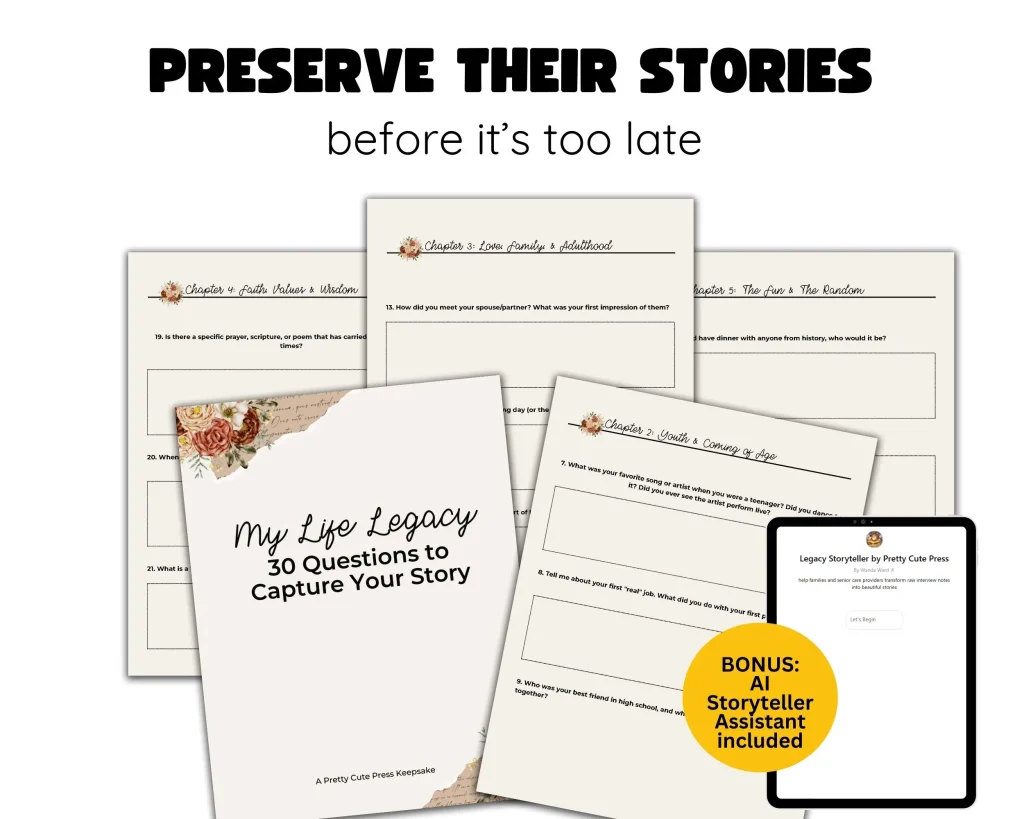
That’s exactly why I created the Legacy Life Story Interview Questions Kit.
It includes:
• 30 thoughtfully arranged life story questions
• A printable and digital fillable workbook
• A simple AI Storyteller Assistant that helps transform rough notes into a polished short story or sentimental tribute
You don’t have to be a writer.
You just have to ask the questions and capture the memories.
The framework is already built for you.
It removes the “where do I begin?” feeling and gives you a complete framework.
You can explore the full kit here
A Gentle Reminder
Although some families choose meaningful dates like birthdays, anniversaries, or even holidays to begin documenting stories and turning them into small keepsakes or remembrance pieces, you don’t need a special occasion.
You don’t need perfect timing.
You don’t need fancy equipment.
You just need a notebook, a quiet hour, and the courage to ask.
Because someday becomes later faster than we expect.
If you’re ready to start preserving their story in a structured, meaningful way, you can begin today.
And your family will be grateful you did.